Why Florida's Climate Is So Hard on Sliding Doors
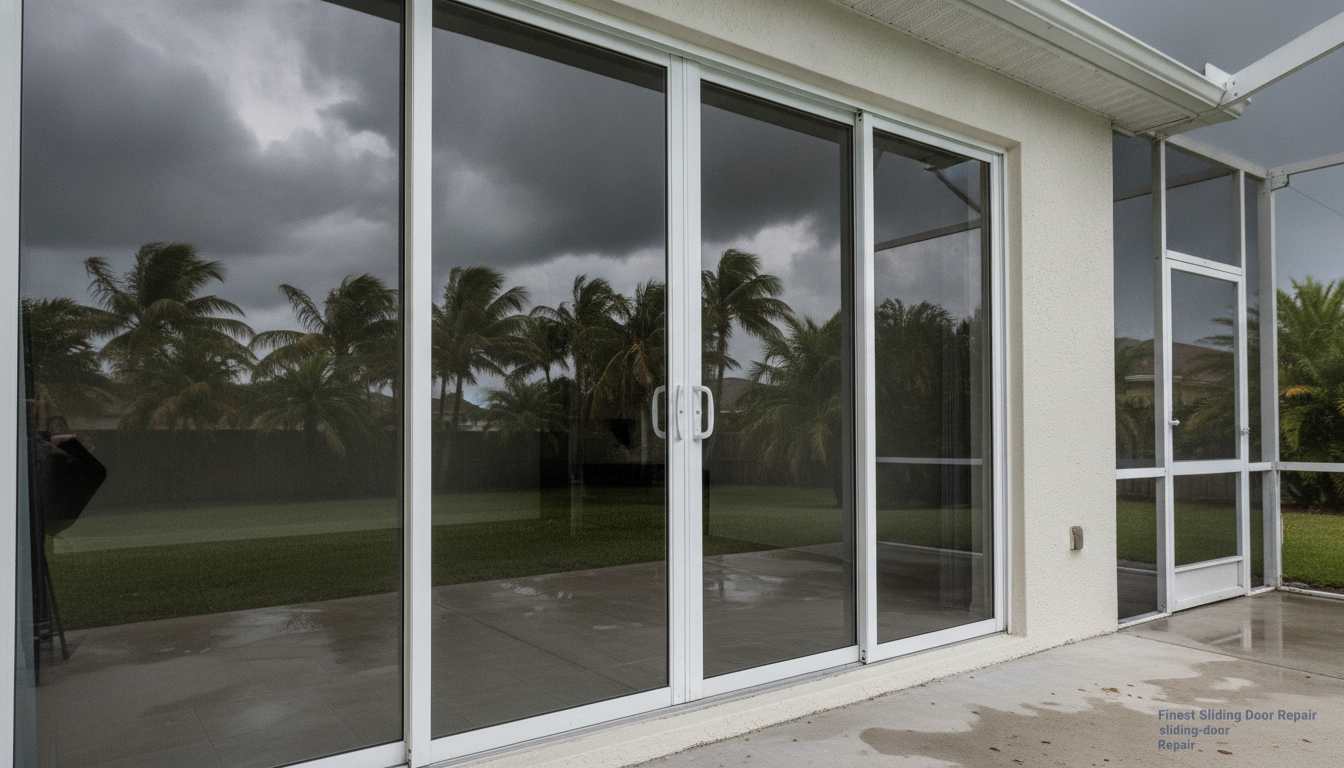
Homeowners who moved to Kissimmee or Orlando from drier climates are often surprised by how quickly their sliding patio doors deteriorate compared to what they experienced up north. The culprits are well known to any Central Florida contractor: year-round high humidity that promotes corrosion and mold, intense UV exposure that degrades rubber seals and nylon components, sandy soil that abrades track channels, and the annual threat of tropical storms and hurricanes that put every seal, lock, and glass panel to the test.
The good news is that none of these problems are inevitable if your door system is properly maintained and repaired at the first sign of trouble. At Finest Sliding Door Repair, we serve Kissimmee and Orlando homeowners year-round, and we consistently see the same patterns of neglected maintenance escalating into expensive repairs that could have been avoided. This guide covers the most important steps you can take to protect your investment.
1. Keep the Track Clean and Lubricated — More Often Than You Think
In a dry climate, cleaning a sliding door track two or three times a year is generally sufficient. In Central Florida, we recommend cleaning the lower track channel once a month during rainy season (June through September) and at least every six to eight weeks the rest of the year. Fine sand, pollen, and organic debris accumulate quickly in the channel, and once it compacts, it grinds against the roller wheels with every use.
Use a stiff brush or vacuum to remove loose debris, then wipe the channel with a damp cloth. Once dry, apply a silicone-based spray lubricant — never WD-40, which attracts additional dust and can degrade rubber seals — along the full length of the track. The same silicone lubricant should be applied to the rollers and the weatherstripping pile to keep everything moving freely and sealing properly.
If cleaning and lubrication don't restore smooth operation, the track surface itself may be damaged. Our sliding door track repair and replacement service includes a full channel inspection to determine whether cleaning, reshaping, or a full track replacement is the right next step.
2. Inspect and Replace Weatherstripping Before Rainy Season
The pile weatherstripping along your door's vertical stile and the sweep or wiper seal along the bottom threshold are your home's first defense against the torrential downpours that hit Kissimmee and Orlando from June through October. UV exposure causes rubber and foam seals to harden and crack within two to four years in Florida's climate, and pile weatherstripping compresses under constant use until it no longer fills the gap between the door and the frame.
You can test your weatherstripping by holding a lit incense stick or thin strip of tissue paper along the closed door's edge on a windy afternoon. Any movement indicates air infiltration — which means water can follow during a heavy rain event. Gaps visible to the naked eye along the stile should be treated as urgent, especially if you are approaching hurricane season.
Our sliding door weatherstripping replacement service covers pile, foam, rubber bulb, and Q-lon compression seals matched precisely to your door's channel width and gap measurement. We also replace the bottom sweep seal in the same visit, since a perfect stile seal loses most of its value if water can travel under the panel during a storm.
3. Check Your Screen Door Mesh and Frame Before Summer
Kissimmee's warm weather means most homeowners want to keep their patio door open as much as possible during the mild months of March through May and again in October and November. Your sliding screen door is what stands between your home and the mosquitoes, no-see-ums, and palmetto bugs that are a fact of life in Central Florida. Torn mesh or a bent screen frame not only lets insects in — it defeats the entire purpose of having a screened lanai or patio.
Inspect your screen mesh before the warm open-door season begins. Small tears should be patched promptly before they enlarge from wind or pet activity. If the frame is bent at a corner or rolls off the track repeatedly, a professional repair that re-squares the frame and installs fresh mesh will restore reliable performance far better than repeated patching of the same screen.
Our sliding screen door repair and replacement service includes re-screening with standard fiberglass mesh, heavy-duty pet-resistant PetScreen, or solar-shade mesh that reduces glare and heat gain while maintaining airflow. We also replace small screen-door rollers and latch hardware in the same visit so the repaired screen slides and latches correctly.
4. Test Your Lock Mechanism Every Season — Especially Before Hurricane Season
A sliding door lock that fails to fully engage is not just a security vulnerability — during a tropical storm or hurricane, a door that is not properly locked can be forced open by wind pressure that no latch can resist once the door is already moving. Florida's salt-laden air corrodes zinc die-cast lock bodies faster than the manufacturers' warranties anticipate, causing hook bolts to stick, handles to wobble, and latch engagement to become unreliable.
Test your lock at the beginning of each season by engaging and disengaging the hook bolt ten times and checking that it fully retracts and extends each cycle. Apply a small amount of silicone lubricant to the bolt mechanism and the strike plate pocket. If the hook bolt feels sticky, fails to extend fully, or requires lifting the door handle with significant force to engage, the lock body is worn and should be replaced before it fails completely.
Our sliding door lock and handle replacement service covers hook-bolt mortise locks, foot-bolt secondary locks, keyed cylinder assemblies, and exterior handles for most residential patio door brands found in Kissimmee and Orlando homes. We can also install a secondary security bar in the same visit for additional protection during storm season.
5. Inspect Your Glass Panel for Chips, Cracks, and Failed Seals
Florida's thermal cycling — mornings that start at 65°F in January and afternoons that reach 90°F by March — creates significant stress on glass panels through thermal expansion. Existing micro-chips or edge damage can propagate into full cracks as the glass expands and contracts. Similarly, dual-pane insulated glass units (IGUs) can lose their hermetic seal from the same thermal stress, allowing moisture to enter the air space and create the milky or foggy appearance that cannot be cleaned away.
Walk around your sliding door twice a year and examine the glass edges and center panel surface carefully. Chips along the edge are particularly dangerous because the edge of a glass panel has no protective coating and is where thermal stress fractures typically begin. Fogging inside a double-pane unit confirms the seal has failed and the insulating value of the unit is compromised — a meaningful issue in a climate where air-conditioning costs dominate household utility budgets.
Our sliding door glass panel replacement service covers single-pane tempered glass, dual-pane insulated units with argon fill, and low-e coated panels that reduce solar heat gain — an especially valuable upgrade for west- or south-facing patio doors in Kissimmee and Orlando where afternoon sun loads are intense. All replacement glass we install is tempered per ASTM C1048 and bears the required safety glazing mark.
6. Create a Pre-Hurricane Season Checklist for Your Sliding Door
With hurricane season running from June 1 through November 30, Kissimmee and Orlando homeowners should complete a full sliding door inspection each May. Use this checklist as your guide:
- Clean and lubricate the lower track channel.
- Test roller smoothness — the door should move with one hand using minimal effort.
- Inspect weatherstripping along the stile and bottom sweep for gaps, cracks, or compression loss.
- Cycle the lock mechanism ten times and verify full hook-bolt engagement.
- Inspect the glass edges for chips or cracks.
- Check the screen door mesh for tears and verify the screen latches securely.
- Confirm that the door's anti-jump upper guide is intact and prevents the panel from derailing.
If any item on this list reveals a problem, addressing it before June is significantly easier and less expensive than dealing with a failed door during an active storm season when repair schedules fill quickly.
Schedule a Full Sliding Door Maintenance Visit in Kissimmee or Orlando
Finest Sliding Door Repair is available Monday through Sunday, 8 AM to 6 PM, to inspect and service all components of your sliding door system in a single visit. Our technicians carry roller cartridges, track profiles, weatherstripping, lock hardware, and screen mesh in the service vehicle so that most maintenance and repair items are completed the same day.
Call us at +1 (689) 302-2227, email [email protected], or visit our shop at 1101 Miranda Ln, #111, Kissimmee, FL 34741 to schedule your seasonal maintenance appointment.
Need Service?
Call +16893022227 or fill out our online form for a free, no-obligation quote.
Request Free Quote